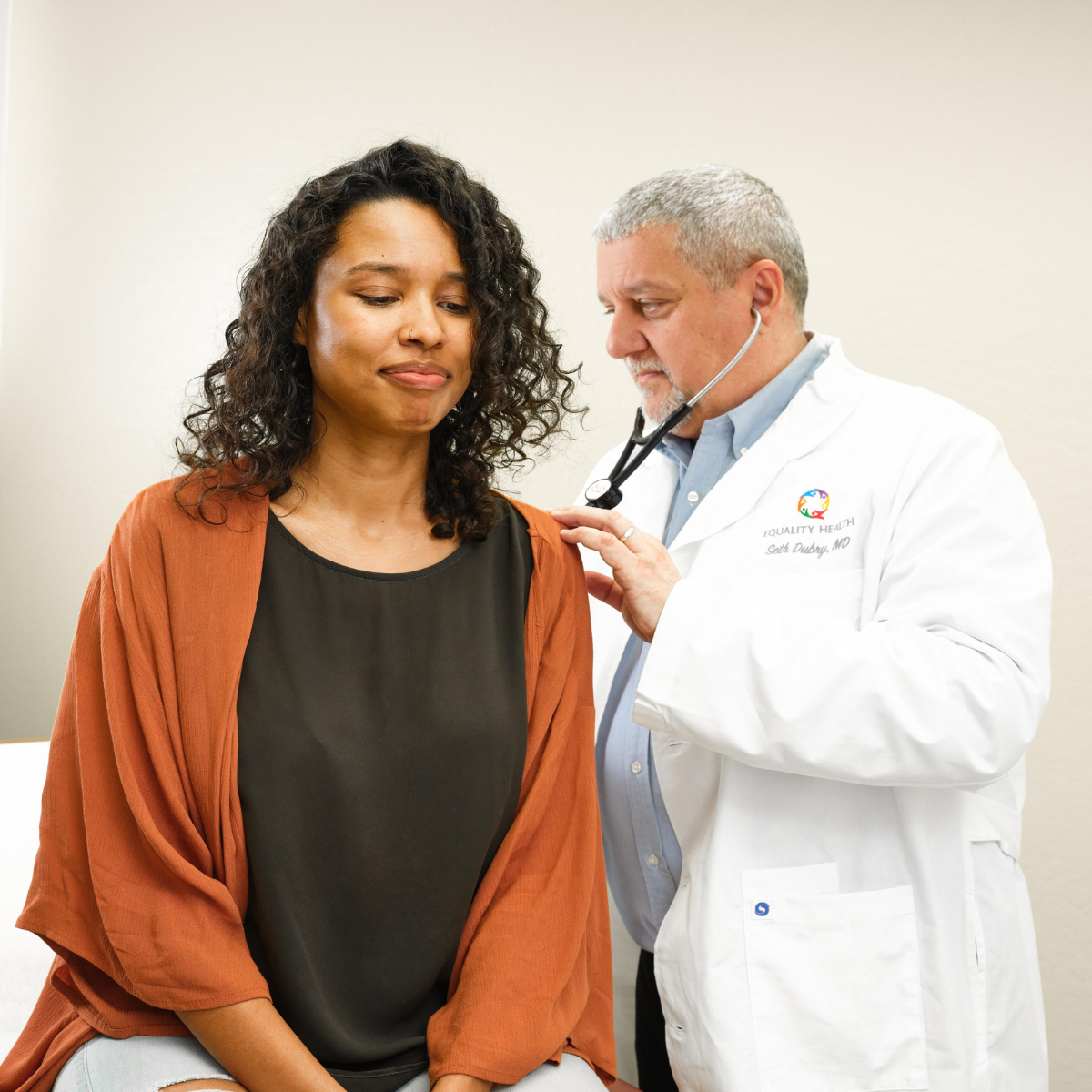

October is Breast Cancer Awareness Month, and for many women, the first person to tell them it is time for a mammogram is their primary care provider. That conversation is where early detection really begins, and it carries a kind of trust that a reminder letter never quite can. What happens next is the harder part, because the screening itself takes place somewhere else, on another day, with people she has not met yet.
We have been thinking a good deal about that distance this year, and about what it would take to make it shorter.
Why it matters, and why now
In April 2024, the U.S. Preventive Services Task Force moved the recommended start of routine screening from age 50 to age 40, with a mammogram every two years through age 74 [1]. The reasons were sobering ones. Breast cancer among women in their 40s had been rising by about 2% a year, and Black women are about 40% more likely to die of the disease than white women [1]. The national quality measure followed in 2025, and it now includes women from 40 to 74 [2].
That change brought in a full decade of women who had been told, quite correctly at the time, that they could wait. Reaching them begins in a primary care office, with a provider they already know and trust.
It cannot end there, though. A mammogram is a screening that a primary care practice cannot complete in its own building. It takes a second appointment at a second place, and for a woman without a car or a free weekday, that second trip is often where a good intention gets lost.
What we are doing
Our work at Equality Health (EH) is to help close that distance. It takes several kinds of effort working together, which are reaching out, scheduling, following through, and making sure the systems involved can talk to one another.
It begins with reaching out. Our member outreach teams spend a great deal of their time on education for women who are due for a well-woman exam, which includes both breast cancer and cervical cancer screening. We identify members who are due, and we reach them by phone, by text message, and in person, and we are adding email as well. The purpose of every one of those conversations is the same, which is to connect a member back to her own primary care provider, because that is where a recommendation carries the most weight. Where it helps, we can also make a screening itself easier to reach, such as arranging at-home collection for cervical cancer screening on a practice’s behalf.
Then come the scheduling and the follow-through. Our Care Specialists and community health workers help members book the appointment, send reminders, and sort out rides, and they stay with it until the visit has happened. In one Arizona payer partnership, breast cancer screening compliance was 10% higher among members we had re-engaged with primary care than among members we could not reach [5].
The last piece is connection. For practices, CareEmpower®, our care coordination platform, offers a list of patients who are due for a mammogram, along with a way to ask our Care Team to help a particular patient from the same place [6]. Our Practice Performance Advisors work alongside office teams to build the follow-up into their routine, so that a recommendation made in the exam room does not have to rest on a patient’s memory, and so that a completed mammogram makes its way back into the chart in time to count.
We are also piloting something that speaks directly to that second appointment, and to the connection between systems. With a small group of practices in two of our markets, we are working with a partner that takes on the imaging referral once a provider has made it. That means reaching out to the patient, helping her find a convenient place and time, taking care of the prior authorization, and making sure the report finds its way back into her provider’s chart. For a practice, that is a meaningful amount of work lifted from the front desk, and for a patient, it is one less thing to arrange on her own.
And sometimes the most direct thing we can do is bring the screening to a place families are already planning to be. On Saturday, November 14, the Equality Health Foundation (EHF) will host its 10th annual Healthy Fall Festival at Percy L. Julian School in Phoenix, in partnership with the Roosevelt school district, and more than 3,000 families are expected [3]. This year Banner is bringing its mobile mammography bus. Arizona Medicaid members who have Banner coverage can book a time on the bus in advance, so that a woman who is due can arrive, be seen, and get back to her family’s Saturday [4].
It takes all of us
For the women we serve, a mammogram should be as close to home, and as easy to reach, as we can help make it.
For primary care providers and their teams, your recommendation is what starts everything, and we are grateful for it. Our part is to help with the second appointment.
For health plans, a screening that needs a second site becomes much more reachable when someone brings that site closer. Banner is doing exactly that in Phoenix this November, and we would welcome the same conversation in every market we serve.
If you are in Phoenix on November 14, we would love to see you. You can find the details at equalityhealthfoundation.org/festival.
References
1. U.S. Preventive Services Task Force. “Breast Cancer: Screening.” Final recommendation statement, April 30, 2024. https://www.uspreventiveservicestaskforce.org/uspstf/recommendation/breast-cancer-screening
2. NCQA. “Updates to Breast Cancer Screening Age Range for HEDIS MY 2025.” October 3, 2024.
3. Equality Health Foundation. Healthy Fall Festival, Phoenix event page. https://www.equalityhealthfoundation.org/festival/healthy-fall-festival-phoenix/ (accessed September 21, 2026).
4. Equality Health Foundation. Healthy Fall Festival planning, September 2026.
5. Equality Health Arizona payer partnership performance data.
6. Equality Health. “2026 ECIP Reference Guide,” p. 14; Equality Health. “CareEmpower User Guide.” February 2026, pp. 37–39.